XanGo Scam
Is there a
Xango scam or is it a genuine business opportunity?
The company XanGo [LLC] was established in November 2002, and is a privately owned international network marketing or multi-level marketing [MLM] company based in Lehi, Utah.
The company's name is derived from xanthones and mangosteen which are both
powerful anti-oxidants.
The company markets and distributes Xango juice, a product consisting
of the juice of the mangosteen fruit and the juices of eight other fruits.
They also sell a skin care product
[Glimpse
Intuitive Skin Care] and a nutritional supplement
[XanGo
3SIXTY5].
In October 2008, the company claimed to have over 1 million independent
distributors worldwide, and operated in 28 countries.
The retail price of a 25 ounce [750ml] bottle of XanGo in the USA is $37-50 and the company sells it mainly using a nine-level multi-level marketing structure.
What is XanGo Juice?
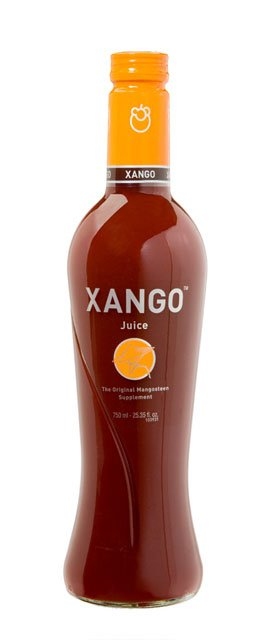
XanGo Juice comprises a mixture of mangosteen juice and the juice concentrates of apples, pears, grapes, raspberries, strawberries, cherries, cranberries and blueberries.
The mangosteen fruit is about the size of a small apple, is purple colored, and has a hard rind. Inside there are usually five to seven seeds surrounded by a sweet, juicy cover [or aril].
The pulp, which is said to resemble a pineapple or peach in taste, is reputed to be a very delicious food, and in Asia it is sometimes called the queen of fruits in honor of both its flavor and its economic importance.
Health Benefits or XanGo Scam?
The question of whether or not XanGo offers any health benefits or is a XanGo scam is the source of many of the negative comments, websites, forum posts and blogger’s articles about a XanGo scam.
Marketing materials used to promote XanGo juice claim more than 20 human health benefits, including anti-ulcer, anti-inflammatory, anti-allergic, anti-cancer, anti-microbial, anti-viral, anti-fungal.
After highlighting these possible benefits the XanGo site then inserts a disclaimer which says,
"These statements have not been evaluated by the FDA. This product is not intended to diagnose, treat, cure or prevent any disease."
Promotional literature for XanGo quotes antioxidants from the inedible rind of the fruit as providing health benefits. However none of the claims has scientific proof established by peer-reviewed research and human clinical trials.
The American Cancer Society states there is no reliable evidence that mangosteen juice, bark or puree is effective as a treatment for cancer in humans.
The Mayo Clinic has stated in October 2005 that "there are no published clinical trials showing evidence that either the fruit or its juice [marketed under the name XanGo juice] is an effective treatment for arthritis, cancer or any other disorder in humans.
On September 20, 2006, the United States Food and Drug Administration issued a warning letter to XanGo LLC International in response to the company's promotion of Xango juice as a drug, in violation of the Federal Food, Drug, and Cosmetic Act [21 U.S.C. § 321(g)(1)], by claiming that it could treat and/or cure various diseases.
Claims of a XanGo Scam
In 2002, XanGo founders Aaron R. Garrity, Gordon A. Morton, and Joseph C. Morton applied for a United States patent [#6730333] for XanGo juice; however the application was rejected by the United States Patent and Trademark Office on April 21, 2005.
|
SCOTTSDALE, AZ - MAY 16, 2005. The U.S. Patent Office issued its final written opinion rejecting all 81 claims in XanGo's Patent No 6,730,333.
This action was taken despite multiple meetings with
XanGo's in-house patent expert Steven Bean, it's outside patent law firm and
the review of over thirty pages of memoranda and supporting affidavits filed
by XanGo LLC, a Lehi, UT company. Specifically, a panel of three expert U.S.
Patent Officers, consisting of the primary examiner, a supervisor patent
examiner and a special program examiner, found that every one of |
On November 3, 2008, the U.S. Court of Appeals for the Federal Circuit ruled that the decision of a patent appeals board to deny XanGo's patent application would still stand.
There have been mixed reviews about the XanGo business opportunity with some claiming a XanGo scam. It appears the majority of the people earn very little for their efforts and many people have trouble getting started.
Most people have seen results from sponsoring other people but have trouble selling the product to real health conscious consumers. The biggest complaint is that the compensation plan is very weak compared to other network marketing opportunities.
In regards to the XanGo scam, Dr Ralph Moss, author of several natural remedy books, has said of mangosteen juice:
|
"In my opinion, what we have here is simply an overpriced fruit drink. Fruit drinks are often healthful beverages. But the only reason I can see that the promoters of mangosteen can get away with charging $37 for this product is that they are playing on patients' hopes and fears in a cynical way. Without the health claims, open or implied, the product could only be sold for at most $5 or $6 [which, for example, is the cost of antioxidant-rich pomegranate juice]" |
Do You Have A Great Story, Tip, or Experience With This Topic?
Do you have any knowledge or experience of the Xango scam to help others.
Share your story, tip or review with the world!
What Other Visitors Have Said
Click below to see contributions from other visitors to this page...
Xango founder Bryan Davis exposes fraud, money laundering and corruption at Xango 
A lawsuit was just filed last week by Xango founder Bryan Davis.
Davis Claims Xango founder and CEO Aaron Garrity has been involved in money laundering, …
Xango top distributor Sherman Unkefer moves on after massive decline in MLM income.
Recent court records obtained through public records show a massive decline in income for Sherman Unkefer and X1.
Rumor has it that Unkefer has placed …
Xango Juice Customer Service Nightmare
My mother was taking this stuff and her distributor had set her up on a recurring order.
She eventually became hospitalized for an unrelated manner …
Xango starting to fade away.
I have heard through a reliable source that Xango will soon join the hundreds of other Multi level Marketing Pyramid schemes that have bit the dust.
…
witness to the tragedy.
http://cheezburger.com/View/5631708160
Yes it is a scam. The main doctor has lied about his credentials, as a background check confirmed, and also lied …
Xango Scam 
My name is Harley and this is a true story about the Xango Scam and I will leave you my E mail if any one cares to verify my story.
My mother Sharon …
Sherman Unkefer 54$$ million civil rico update Not rated yet
Mr Unkefer has decided not to fight the criminal restitution order for $7.5 million dollars. It appears that that amount of evidence from the state of …
Xango Xalo # 4 for top 10 scams targeting the elderly Not rated yet
Xango's new product Xalo promotes anti aging.
According to the National Council on Aging: # 4 for top 10 elderly scams are anti aging products.
Anti …
mb30 be aware of Xango Not rated yet
mb30 - ok, it is Xango trying to make you believe that you can sell energy powder and make tons of money.
This way of selling worthless powder is called, …
Xango, Xalo, Limitless, MB30. Doctors medical license twice suspended by state of Utah,New York Times 6/20/2011 Not rated yet
In an article in the New York Times June 6th 2011, the Doctor who is now promoting Xango's newest product Xalo remains on probation.
The article titled …
xango scam Not rated yet
My name is Harley, I have posted comments on this site and would like to retract those comments.
Get your facts straight! Not rated yet
If it's such a scam then why is the Mayo Clinic using Xango juice for one of their studys? http://www.clinicaltrial.gov/ct2/show/study/NCT00951301?term=mangosteen&rank=1 …
Former Presidential Aid Doug Wead leaves Xango for Isagenix MLM Not rated yet
What? say it's not true! just last year Doug Wead was praising Xango as the best MLM ever.
Doug said he was leaving Xango to take a break and write …
Doug Wead quits Xango for Isagenix Not rated yet
Doug Wead reported last year on his blog, that he was leaving Xango to write more boring history books about the presisdents children.
Seems like Doug …
more proof Mangosteen does nothing Not rated yet
In the May 2012 issue of the Harvard Womens Health Watch 'Ask the Doctor: Does Mangosteen have any health benefits'?
Natural Medicines Comprehensive …
Mangosteen!!!!!!!!!! Not rated yet
Mangosteen is a fruit that my family have in Loas/Thailand. We plant and eat Mangosteen all our lives. It is one of my favorite fruits in the whole world …
- Home ›
- Network Marketing Scams ›
- Xango Scam